

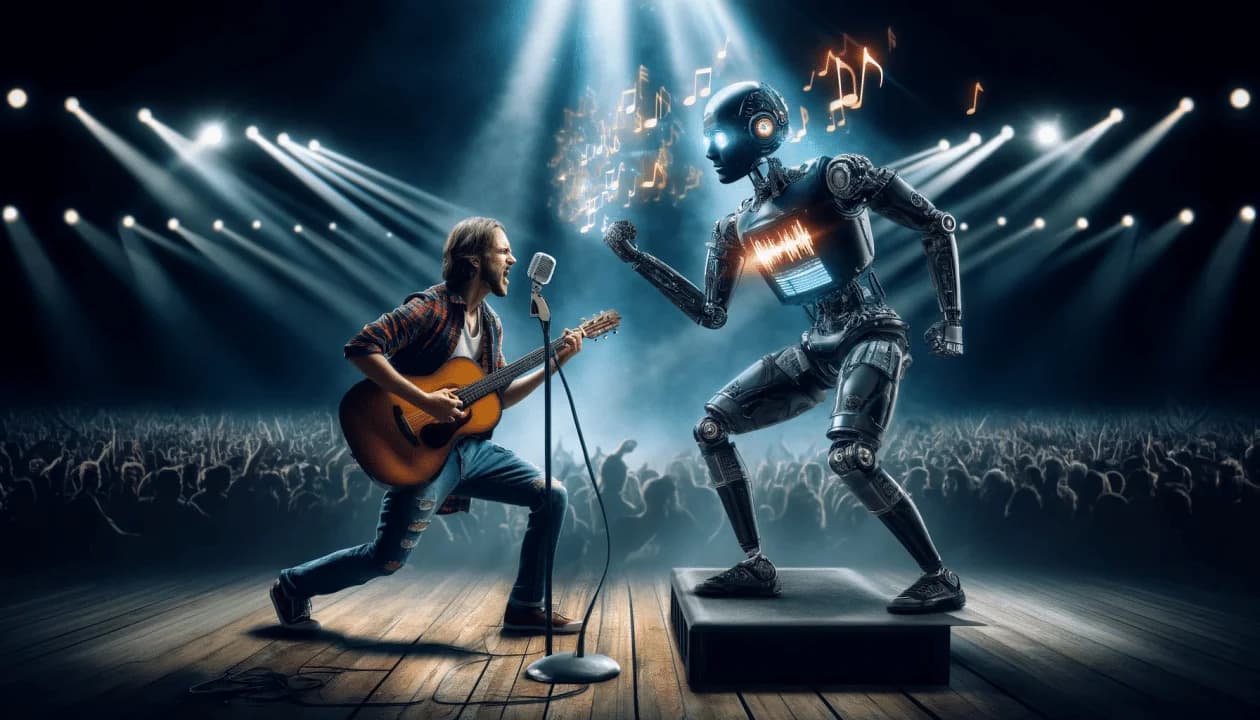
The music industry is currently embroiled in a battle against the rise of artificial intelligence (AI) and its impact on the creation, distribution, and consumption of music. This fight is being led by key players such as the Recording Industry Association of America (RIAA) and various tech companies. Here’s an in-depth look at the ongoing…
The music industry is currently embroiled in a battle against the rise of artificial intelligence (AI) and its impact on the creation, distribution, and consumption of music. This fight is being led by key players such as the Recording Industry Association of America (RIAA) and various tech companies. Here’s an in-depth look at the ongoing conflict and its implications. The Music Industry Vs AI.

The Emergence of AI in Music
Artificial intelligence has made significant strides in various industries, including music. AI can now compose songs, create lyrics, and even perform music. Tools like Google’s Magenta and OpenAI’s Jukedeck have showcased AI’s potential to generate music that closely mimics human composition. These advancements, while innovative, pose challenges to the traditional music industry.

The Threat to Copyright and Creativity
One of the primary concerns is the potential infringement on copyright laws. AI-generated music can closely imitate existing songs, raising questions about originality and intellectual property rights. The RIAA has expressed concerns that AI tools might be used to create derivative works without proper licensing, leading to potential legal battles over copyright violations.
Furthermore, there is a fear that AI might undermine human creativity. Artists and musicians invest significant time and effort into their craft. The ease with which AI can produce music could devalue their work. This has led to a call for stricter regulations and guidelines. These aim to protect human creativity and ensure fair compensation for artists.

Industry Response and Legal Actions
In response to these challenges, the music industry has started taking legal and regulatory actions. The RIAA has been at the forefront, advocating for policies that safeguard artists’ rights. They work to ensure that AI-generated music adheres to copyright laws. There have been discussions about updating copyright regulations to address the unique challenges posed by AI.
Tech companies, on the other hand, are working on ways to integrate AI into the music industry responsibly. Some companies are developing AI tools that assist rather than replace human artists. These tools can help musicians with tasks like mixing, mastering, and even generating ideas. They aim to enhance human creativity rather than overshadow it.

The Role of AI in Music Distribution
AI is also playing a significant role in music distribution. Platforms like Spotify and Apple Music use AI algorithms to curate playlists. They recommend songs to users, which enhances user experience. However, it raises concerns about the impact on artists. There is a fear that AI-driven recommendations might favor already popular artists, making it harder for new and independent musicians to gain visibility.
The industry is exploring ways to ensure that AI-driven platforms promote a diverse range of artists. This includes tweaking algorithms to support emerging artists and ensuring that AI recommendations do not solely rely on popularity metrics.

Ethical and Cultural Considerations
Beyond legal and economic implications, the rise of AI in music also brings up ethical and cultural questions. There is a debate about the authenticity of AI-generated music and its place in the cultural landscape. Some argue that music, as an expression of human emotion and experience, cannot be authentically replicated by machines.
On the cultural front, there is a concern that AI might lead to a homogenisation of music. With AI generating music based on patterns and data, there is a risk that unique cultural and regional styles might be overshadowed. More generic, data-driven compositions might become more common.

Looking Ahead: Collaboration Over Conflict
While the music industry’s AI fight is complex, there is a growing consensus that collaboration between tech companies and the music industry might be the best way forward. By working together, they can develop AI tools that support and enhance human creativity. They also aim to ensure that artists’ rights are protected.
Efforts are being made to create ethical guidelines for AI in music. These guidelines focus on transparency, accountability, and respect for intellectual property. The goal is to harness AI’s potential in a way that benefits artists, consumers, and the industry as a whole.

Conclusion
The integration of AI into the music industry is inevitable, and while it brings challenges, it also offers opportunities for innovation and growth. The key lies in finding a balance where AI can complement human creativity without undermining it. By establishing clear regulations and fostering collaboration, the music industry can navigate the AI era successfully. They can ensure that both artists and technology can thrive together.

For more insights into the latest trends and developments in the music industry, visit What’s Hot in UAE.


