

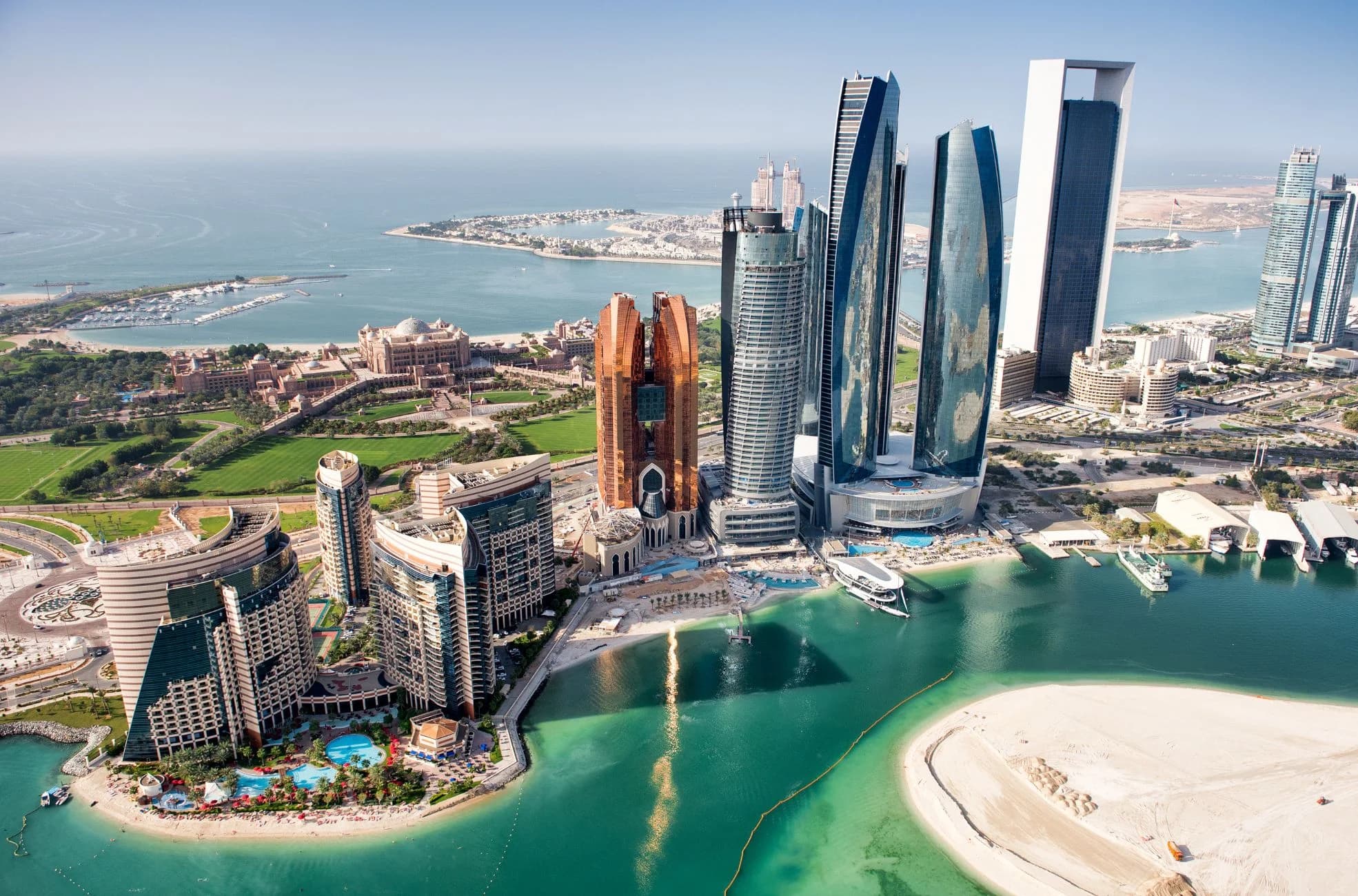
✅ Updated June 2026 — Abu Dhabi’s economic diversification has accelerated significantly. The emirate’s non-oil GDP now represents over 50% of total GDP. Key growth sectors: financial services (ADGM is now one of the world’s top 15 financial centres), technology (Hub71 has attracted 400+ startups), tourism (Yas Island drew 12m+ visitors in 2025), and culture…
I’ve watched Abu Dhabi change before my eyes. This isn’t the slow, incremental growth you see in most cities — it’s a calculated, deliberate transformation, driven by strategy rather than chance. Over the past decade, the capital of the United Arab Emirates has been rewriting its economic narrative, moving from a reliance on oil revenues to a diversified, innovation-driven economy.
What’s happening now is more than a phase. The Abu Dhabi Business Boom is a carefully engineered wave, and being here, you can feel the confidence in every new project breaking ground.

From Vision to Reality
Abu Dhabi’s transformation has a blueprint — Vision 2030. When the plan was launched in 2007, it was ambitious: take an oil-dependent economy and build a knowledge-based one. I remember sceptics questioning if the emirate could realistically pivot to sectors like technology, healthcare, tourism, and education. More than fifteen years later, the results speak for themselves.
The creation of the Abu Dhabi Investment Office (ADIO) was a turning point. It’s not just an agency; it’s an open invitation to the world’s entrepreneurs, investors, and innovators. I’ve spoken to business owners who came here for ADIO’s incentives — tax breaks, streamlined licensing, and access to decision-makers — and stayed because the ecosystem actually works.
The leadership of Crown Prince Mohammed bin Zayed Al Nahyan has been decisive. His emphasis on sustainability and innovation isn’t lip service — it’s embedded in flagship developments like Masdar City, a model for urban sustainability. This is a place where solar panels aren’t a marketing gimmick; they’re part of a broader vision to future-proof the emirate.
Building for the Future
You can’t talk about Abu Dhabi’s business boom without talking about its infrastructure. If you’ve flown through the city recently, you’ve probably seen the Midfield Terminal at Abu Dhabi International Airport. Once fully operational, it will transform the passenger experience and increase capacity, making the capital an even more attractive base for regional and global operations.
On the ground, the Etihad Rail project is quietly connecting the dots. Once completed, it will link Abu Dhabi to Dubai, the Northern Emirates, and even neighbouring countries. For logistics, manufacturing, and trade, this is game-changing — cutting travel times, slashing costs, and boosting inter-emirate commerce.
Tourism and Culture as Economic Drivers
Tourism in Abu Dhabi is no longer an afterthought; it’s a pillar of diversification. Yas Island has become a brand in its own right — home to Ferrari World, Yas Waterworld, and the Yas Marina Circuit, which I still say is one of the most impressive Grand Prix venues in the world. These aren’t just attractions; they’re economic engines that create jobs, draw international visitors, and position Abu Dhabi as a year-round destination.
Then there’s culture. The opening of the Louvre Abu Dhabi in 2017 wasn’t just about art; it was a statement. It told the world that the UAE capital is a cultural heavyweight, capable of attracting the world’s most prestigious institutions and curating experiences that rival those in Paris or New York.
Healthcare and Education as Growth Sectors
The Cleveland Clinic Abu Dhabi has raised the bar for healthcare in the region. I’ve seen medical professionals relocate here purely because of the quality of this facility. It isn’t just about treating patients; it’s about setting global standards.
Education, too, has been transformed. Campuses of New York University Abu Dhabi and Sorbonne University Abu Dhabi are more than just buildings — they’re magnets for global talent. The ripple effect is significant: students bring families, academics bring research funding, and the city gains intellectual capital.
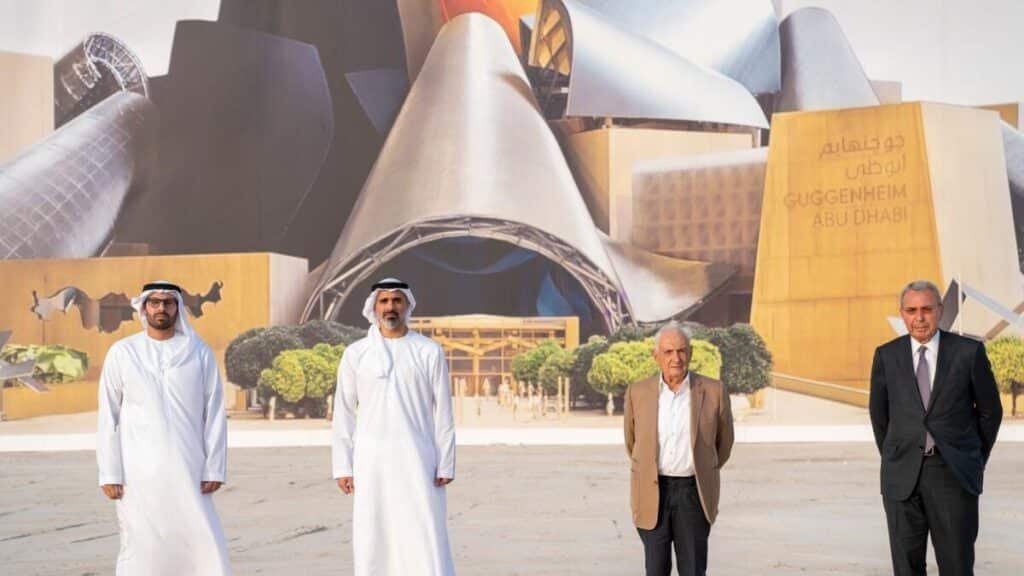
Technology and Innovation at the Core
Abu Dhabi’s Hub71 is one of those places you walk into and immediately feel the energy. Start-ups from around the world have set up here, drawn by funding opportunities, mentorship programmes, and the kind of networking environment you can’t fake. I’ve met founders who’ve told me their companies scaled faster in Abu Dhabi than they ever could in more “traditional” tech hubs.
This isn’t by accident. The government has created a policy environment where innovation can thrive — clear regulations, intellectual property protections, and an openness to emerging technologies like AI, blockchain, and renewable energy solutions.
The Power of Economic Zones
Two names dominate the conversation here: Abu Dhabi Global Market (ADGM) and Khalifa Industrial Zone Abu Dhabi (KIZAD).
ADGM, on Al Maryah Island, has become a magnet for banks, investment firms, and multinational corporations. The regulatory framework is transparent, business-friendly, and internationally respected. For companies looking for a Middle East base with global standards, this is it.
KIZAD, meanwhile, is where scale meets strategy. It’s one of the largest industrial zones in the region, with seamless access to Khalifa Port. For manufacturers and traders, it offers direct routes to global markets — and the cost efficiencies of operating within an integrated logistics hub.
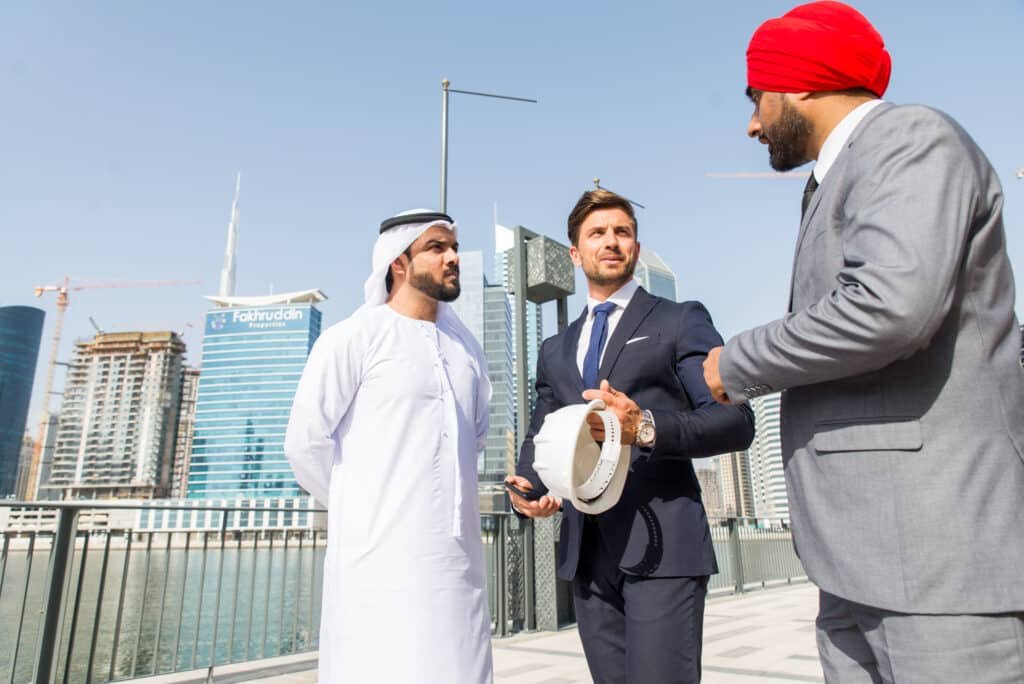
The Economic Impact
The numbers tell a compelling story. Abu Dhabi’s GDP has been steadily climbing, supported by an increase in foreign direct investment and the expansion of non-oil sectors. The job market has broadened, with demand for skills in engineering, healthcare, tech, and finance rising sharply.
The city has also focused on developing its human capital — training programmes, scholarships, and partnerships with global institutions are building a workforce that’s as diverse as it is skilled.
Looking Ahead
Abu Dhabi’s growth story is far from over. The Economic Vision 2030 framework still guides the emirate’s priorities, but there’s also a broader alignment with the UAE’s sustainability goals and digital transformation agenda. Renewable energy projects, AI-driven public services, and smart city initiatives are all in the pipeline.
The aim is clear: become a global economic hub that’s not only competitive today but resilient for decades to come. And if the past fifteen years are anything to go by, that aim is well within reach.
Milestones in Abu Dhabi’s Business Rise
2020 – Abu Dhabi International Airport expansion
2007 – Vision 2030 launched
2010 – Yas Marina Circuit opens
2015 – Abu Dhabi Global Market (ADGM) established
2026 – New economic licences up 21% and freelance licences up 261% year-on-year in Q1, per Arabian Business (June 2026) and Economy Middle East (July 2026)
2017 – Louvre Abu Dhabi inaugurated


